The Ultimate Guide to Tree Pairing in UK Gardens – Choosing Trees That Thrive Together

Updated: Feb 2
Table of Contents

Tree pairing is the practice of planting compatible tree species together so they support, rather than compete with, one another. In UK gardens, choosing the best trees to plant together improves establishment success, long-term health, seasonal interest, and wildlife value.
This guide is the main reference article explaining why tree pairing works, how to choose trees that grow well together in the UK, and which combinations reliably succeed. It is written for UK gardeners, landscapers, and landowners who want clear, practical advice backed by real planting experience.
In our experience supplying trees to UK customers at Bowhayes Trees, thoughtfully paired trees establish faster, require less intervention, and perform better over decades than isolated or poorly matched plantings.
What Tree Pairing Is and Why It Works
Tree pairing works because trees interact below ground as much as they do above ground. When species with similar needs are planted together, they create stable growing conditions rather than competing for resources.

In UK gardens, successful tree pairings typically share:
Similar soil preferences
Comparable water requirements
Compatible growth rates
Root systems that do not aggressively compete
Trees that grow well together regulate moisture, moderate soil temperature, and reduce environmental stress. This leads to stronger root systems and healthier canopies.
The Royal Horticultural Society confirms that mixed planting improves resilience and reduces failure rates compared to single-species planting.
The Benefits of Pairing Trees Correctly
Pairing trees is not just about survival — it directly improves garden performance.
Key Benefits of Tree Pairing
Seasonal interest: Blossom, autumn colour, bark, and evergreen structure can be staggered across the year
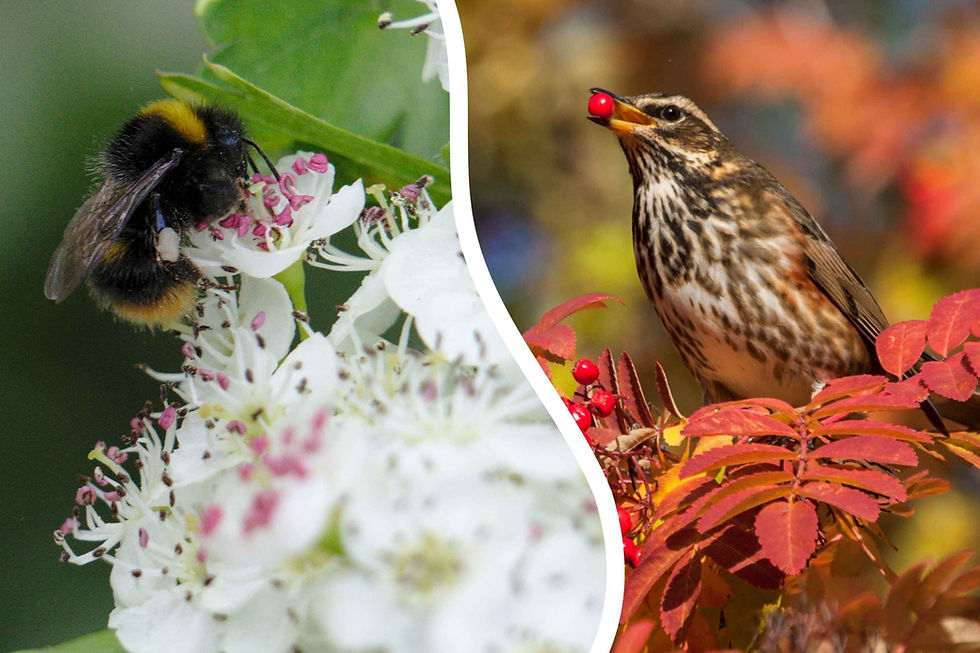
Wildlife value: Mixed trees provide nectar, berries, shelter, and nesting opportunities
Privacy and screening: Layered planting creates natural boundaries without harsh fencing
Higher success rate: Compatible trees establish more reliably in UK conditions
According to the Woodland Trust, mixed tree planting supports significantly more insects and birds than monoculture planting.
How to Choose Trees That Grow Well Together in the UK
When selecting trees that grow well together in the UK, compatibility matters more than appearance.
The Four Core Factors to Assess
1. Mature Size and Growth Habit
Trees should reach maturity at compatible heights and spreads. Pairing a fast-growing species with a slow ornamental often leads to light deprivation and poor form.
2. Soil Type and Drainage
UK soils vary widely. Trees suited to clay soils should be paired with others tolerant of seasonal wetness, as outlined by GOV.UK soil guidance.
3. Light Requirements
Sun-loving trees struggle when paired with dense-canopy species. Shade tolerance must align.
4. Root Behaviour
Aggressive or surface-spreading roots should not be paired with shallow-rooted trees.
Always plan based on mature size, not the tree’s size at planting.
Tree Pairing by Garden Goal

Choosing trees that grow well together is much easier when you start with a clear goal. Whether you want wildlife value, privacy, or year-round interest, successful tree pairing comes down to matching growth habits, seasonal performance, and long-term scale.
The table below outlines the most reliable tree pairing strategies for UK gardens, based on real planting outcomes rather than theory.
Garden goal | Recommended pairing approach | Why does this work in UK gardens |
Native flowering tree + fruiting tree | Provides nectar, berries, and shelter across multiple seasons, supporting birds and pollinators year-round | |
Evergreen tree + light-canopy deciduous tree | Maintains screening while allowing winter light through, reducing shade stress | |
Compact ornamental + upright grower | Controls spread at maturity while still creating visual layering | |
Two trees with different peak seasons | Extends visual impact from spring blossom through to autumn colour | |
Wind resilience | Mixed species with different canopy structures | Reduces wind damage compared to single-species planting |
Productive planting | Two compatible fruiting trees | Improves pollination success and spreads harvest times |
These pairing strategies underpin the tree bundles and curated pairings offered by Bowhayes Trees, which are selected for long-term success in UK conditions.
Evergreen and Deciduous Tree Pairing Explained
Why This Combination Works
Deciduous trees allow winter light through
Evergreens provide year-round structure and screening
Root competition is often reduced due to different growth rhythms
Reliable Evergreen + Deciduous Pairings
The Forestry Commission supports mixed evergreen and deciduous planting for wind resilience and long-term stability
Proven Example Tree Pairings Using Bowhayes Trees
At Bowhayes Trees, our paired tree bundles are carefully selected to demonstrate how tree pairing works in practice, not just in theory. Each pairing is based on compatible growth habits, seasonal interest, and long-term performance in UK conditions.
In our experience supplying trees to UK customers, these combinations establish reliably, mature evenly, and deliver a stronger visual impact than single-species planting.

Pair Name | Tree Combination | Best For | Why This Pairing Works | Garden Suitability |
Flowering Cherry ‘Kanzan’ + Flowering Cherry ‘Pink Perfection’ | Spring blossom and visual impact | Matching growth rates, similar soil preferences, overlapping blossom periods without competition | Medium to large gardens | |
Rowan (Sorbus aucuparia) + Juneberry (Amelanchier lamarckii) | Birds, pollinators, biodiversity | Staggered flowering and fruiting, compatible roots and light needs, strong year-round wildlife value | Wildlife-focused gardens | |
Maple ‘Autumn Flame’ or ‘Redpointe’ + Sorbus ‘Olympic Flame’ | Autumn colour and contrast | Shared soil preferences, complementary canopy shapes, intense seasonal colour without overcrowding | Medium to large gardens | |
Crab Apple ‘Wedding Bouquet’ + Flowering Cherry ‘Blushing Bride’ | Elegant feature planting | Similar ornamental habits, pollinator-friendly blossom, and decorative fruit | Feature areas, near living spaces | |
Himalayan Birch ‘Snow Queen’ + Acer ‘Crimson King’ | Bark and foliage contrast | Light birch canopy adds movement, Acer provides depth and structure, and compatible spacing | Medium to large gardens | |
Apple ‘Scrumptious’ + Pear ‘Conference’ | Productive gardens | Similar care and pruning needs, shared soil preferences, efficient use of space | Productive and family gardens | |
The Pair of Plums | Victoria Plum + ‘Oullins Golden Gage’ | Extended harvest | Compatible pollination timing, similar growth habit and root depth | Traditional UK gardens |
Redbud ‘Hearts of Gold’ + Redbud ‘Eternal Flame’ | Ornamental foliage contrast | Identical growth requirements, strong colour contrast, controlled size | Small to medium gardens | |
The Pair for Life | Holm Oak (Quercus ilex) + Silver Birch (Betula pendula) | Long-term structure and resilience | Evergreen permanence with light, seasonal movement, and excellent wind tolerance | Large gardens and landscapes |
This pairing combines two ornamental cherries with similar growth rates and soil preferences. Together, they create a prolonged spring display, with overlapping blossom periods that extend seasonal interest without competition.
Why this pairing works:
Matching ornamental cherry root behaviour
Similar mature height and canopy spread
Ideal for medium to large UK gardens
This is a classic example of trees that grow well together in the UK when visual impact is the primary goal.
A proven wildlife-friendly combination that supports pollinators, birds, and beneficial insects throughout the year.
Why this pairing works:
Staggered flowering and fruiting seasons
Compatible root systems and light needs
Excellent for biodiversity-focused gardens
This pairing underpins our guide to companion trees for gardens where wildlife value matters.
3. The Hot Pair
Selected for dramatic colour contrast, this pairing delivers intense autumn tones while maintaining balanced growth.
Why this pairing works:
Shared preference for moist, well-drained UK soils
Complementary canopy shapes
Strong seasonal definition without overcrowding
This is a definitive example of pairing for maximum seasonal impact.
Designed for elegance, this pairing offers a spring blossom followed by decorative fruit.
Why this pairing works:
Similar ornamental growth habits
Pollinator-friendly blossom
Suitable for feature planting near living spaces
This combination is particularly popular for celebratory and statement gardens.
A bold contrast of light bark and deep foliage colour.
Why this pairing works:
Birch provides a light canopy and movement
Acer adds structure and depth
Compatible spacing and root behaviour
This pairing demonstrates how contrast can be achieved without competition.
A productive pairing chosen for reliable cropping and manageable growth.
Why this pairing works:
Similar pruning and care requirements
Shared soil preferences
Efficient use of space in productive gardens
This pairing shows how the best trees to plant together can also be practical.
A classic orchard-style combination offering extended harvest potential.
Why this pairing works:
Compatible pollination timing
Similar root depth and growth habit
Ideal for traditional UK gardens
Chosen for foliage contrast rather than height variation, this pairing is ideal for ornamental planting.
Why this pairing works:
Identical growth requirements
Striking colour contrast through the season
Suitable for small to medium gardens
A long-term pairing combining permanence with movement.
Why this pairing works:
Evergreen structure from Holm Oak
Light canopy and seasonal change from Silver Birch
Excellent wind resilience and longevity
This pairing exemplifies evergreen and deciduous tree pairing, merging long-term structure with seasonal variation.
Across all Bowhayes tree pairings, the unifying principle is balance — no tree is selected that will outgrow, overshadow, or outcompete its partner over time.
Common Tree Pairing Mistakes to Avoid
Even well-chosen trees can fail if they are paired incorrectly. In UK gardens, most tree pairing problems are not caused by poor tree quality, but by planning mistakes made at the planting stage.

1. Pairing Fast-Growing Trees with Slow Ornamentals
Fast-growing species quickly dominate light, water, and nutrients. When paired with slower-growing ornamental trees (for example, Hybrid Poplar (Populus spp.) planted alongside Japanese Maple (Acer palmatum)), the smaller tree often becomes suppressed within a few years.
Why this fails: Growth imbalance leads to poor structure, increased stress, and long-term decline of the slower-growing tree.
2. Ignoring Mature Canopy Spread
Trees are frequently planted based on their size at purchase rather than their eventual mature spread. Larger ornamental and feature trees such as Tulip Tree (Liriodendron tulipifera) or Sweet Gum (Liquidambar styraciflua) require significantly more space than they appear to at the planting stage.
Why this fails: As canopies expand, trees compete for light and airflow, reducing flowering, fruiting, and overall health.
3. Mixing Incompatible Soil Preferences
UK gardens often contain a mix of soil types, particularly clay. Pairing trees that require free-draining soil with species that thrive in moisture-retentive conditions causes ongoing stress. For example, planting Magnolia close to Willow (Salix spp.) rarely succeeds.
Why this fails: One tree will always be over- or under-watered, regardless of maintenance.
4. Overcrowding at Planting Stage
Planting trees too closely may look effective initially, but it causes long-term competition below ground.
Why this fails: Roots overlap too early, limiting establishment and increasing drought sensitivity.
5. Overusing Evergreen Pairings
Evergreen trees are often chosen for privacy, but pairing multiple evergreens, such as Western Red Cedar (Thuja plicata) or Cherry Laurel (Prunus laurocerasus), too closely together can create excessive shade.
Why this fails: Evergreen canopies block winter light, reducing overall garden vitality and limiting understorey growth.
In our experience supplying trees to UK customers, spacing and growth-rate mismatch cause more long-term problems than tree choice itself.
Final Thoughts: How This Guide to Tree Pairing Helps You Choose Better Trees
This guide to tree pairing is one of the most reliable ways to improve planting success in UK gardens. When trees are chosen to grow well together, they establish faster, require less maintenance, and deliver stronger visual and ecological results.
If you are planning a new scheme, explore Bowhayes Trees’ ornamental, native, and screening tree collections, which are selected and supplied specifically for UK conditions.
This guide forms the foundation of a wider tree pairing content cluster, supporting more detailed articles on wildlife, small gardens, and privacy planting.
Related Tree Pairing Guides
You may also find these focused guides helpful, depending on your planting goals:
Tree Pairings for Privacy in UK Gardens – Evergreen and deciduous combinations for natural, long-term screening
Tree Pairings for Small Gardens – Compact trees that stay in scale and proportion
Wildlife-Friendly Tree Pairings – Tree combinations that support birds, bees, and biodiversity year-round
FAQs
What are the best trees to plant together in the UK?
Trees with similar soil, light, and growth requirements, particularly native species, are the most reliable pairings.
Can evergreen and deciduous trees be planted together?
Yes. This is one of the most effective pairing strategies for year-round structure and light balance.
How close should paired trees be planted?
Spacing should always be based on mature canopy spread, not planting size.
Do Bowhayes Trees sell trees suited for pairing?
Yes. Many Bowhayes Trees bundles and collections are designed around compatible species.
To display the Widget on your site, open Blogs Products Upsell Settings Panel, then open the Dashboard & add Products to your Blog Posts. Within the Editor you will only see a preview of the Widget, the associated Products for this Post will display on your Live Site.
Start your 14 days Free Trial to activate products for more than one post.
icon above or open Settings panel.
Please click on the