


Wildlife-Friendly Tree Duos: Pairings to Boost Biodiversity

Table of Contents
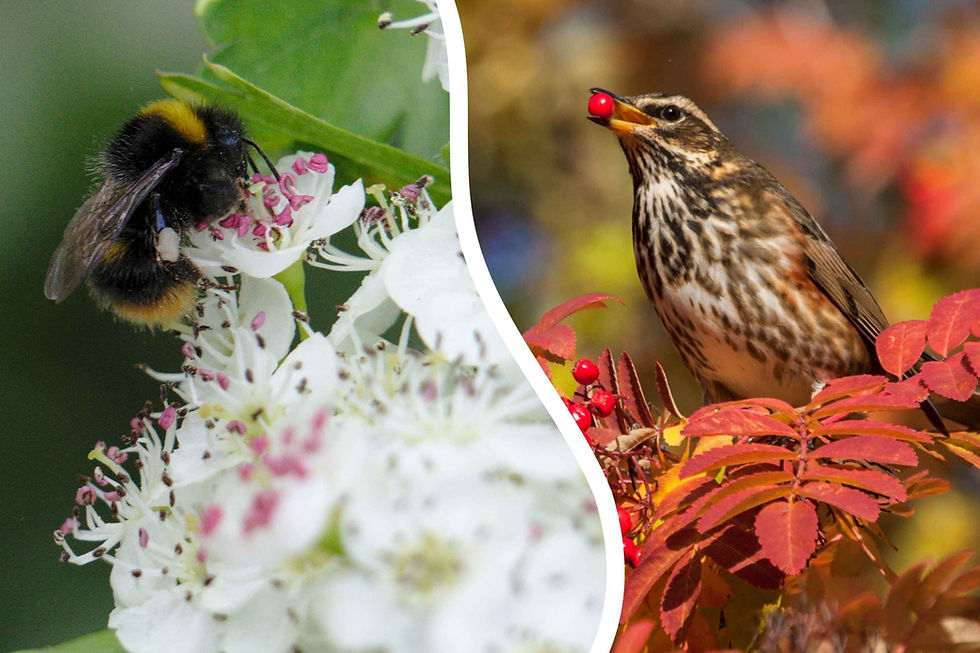
Creating a wildlife-friendly garden in the UK is not just about planting more trees — it is about planting the right trees together. Pairing trees that support birds, bees, and insects at different times of year creates a richer, more reliable habitat than planting single species in isolation.
This guide focuses on wildlife-friendly trees UK gardens can rely on, explaining how specific tree pairings work together to provide nectar, berries, shelter, and long-term ecological value. It is written for gardeners, landowners, and wildlife-conscious growers who want clear, practical advice rather than vague planting lists.
In our experience supplying trees to UK customers at Bowhayes Trees, gardens that use thoughtful tree pairings consistently support more birds, pollinators, and insects than gardens planted with single-species trees.
Why Tree Pairing Matters for Wildlife
Wildlife does not use gardens in a single season. Birds, bees, and insects rely on different resources at different times of year, from early spring blossom to winter shelter and food. This is supported by guidance from the Royal Horticultural Society on wildlife gardening, which explains how trees contribute to habitat, food sources, and seasonal shelter for a wide range of species.
Tree pairing works because each tree plays a specific role within the garden ecosystem:
One tree may provide early nectar for pollinators
Another may offer berries or seeds later in the year
A dense tree may give shelter, while a lighter canopy allows light through
When trees are paired correctly, wildlife can move between them as conditions change, rather than abandoning the garden altogether.
In UK gardens, biodiversity increases most when trees are chosen for function, not just appearance.
Wildlife-Friendly Tree Duos UK: Best Pairings for Birds and Bees
Below are proven wildlife-friendly tree duos that UK gardens can rely on, each chosen for how the paired trees work together to support birds, bees, and insects throughout the year.
Wildlife-Friendly Tree Pairings at a Glance
Tree Pairing | Best For | Seasonal Benefits | Garden Size |
Bees, birds, nesting wildlife | Spring blossom for pollinators, autumn berries, dense shelter | Small to medium | |
Birds and insects | Late spring nectar, autumn berries, winter food and cover | Medium to large | |
Long-term biodiversity | Insects, acorns, evergreen winter shelter | Large gardens/land | |
Smaller wildlife gardens | Early insect life, light canopy, autumn berries | Small to medium |
1. Crab Apple and Hawthorn: One of the Best Trees for a Wildlife Garden
This is one of the most effective wildlife-friendly tree pairings available for UK gardens.
Crab Apple trees produce abundant spring blossom, which is a vital early food source for bees and other pollinators emerging after winter. Hawthorn follows closely behind, extending nectar availability and supporting a wider range of insects.
Later in the year, Hawthorn berries become a crucial food source for birds, often lasting well into winter. The dense, thorny structure of Hawthorn also provides excellent nesting and shelter.
Why this pairing benefits wildlife: Together, Crab Apple and Hawthorn support pollinators in spring, birds in autumn and winter, and nesting activity throughout the year. This pairing delivers consistent wildlife value across multiple seasons.
Rowan and Hawthorn are both native UK species with exceptionally high wildlife use, making them ideal for biodiversity-focused gardens.
Rowan flowers attract pollinating insects in late spring, while its bright red berries are a major food source for birds such as thrushes and blackbirds in autumn. Hawthorn complements this by providing earlier blossom and dense cover for nesting. Both species are recognised by the Royal Horticultural Society for their value to pollinators, with nectar- and pollen-rich flowers that support bees and other beneficial insects during key feeding periods.
Because both trees are well adapted to UK conditions, they establish reliably and require minimal intervention once planted.
Why this pairing benefits wildlife: This pairing combines nectar, berries, and shelter in a way that supports birds and insects throughout the year. It is particularly effective along boundaries or as part of a wildlife corridor.
Oak supports more wildlife species than any other native UK tree. Hundreds of insect species rely on Oak, which in turn feed birds throughout the breeding season. Acorns provide an important autumn food source for mammals and birds.
Holly plays a different but equally important role. As an evergreen, it provides shelter during winter when most trees are bare. Holly berries also offer a vital winter food supply.
Why this pairing benefits wildlife: Oak delivers unmatched long-term biodiversity value, while Holly ensures year-round shelter and winter food. Together, they create a resilient habitat that supports wildlife in every season.
Buglife has published guidance on supporting pollinators, which highlights the importance of nectar-rich trees in sustaining bee and insect populations.
4. Silver Birch and Rowan: A Lighter Pairing for Smaller Wildlife Gardens
Silver Birch and Rowan are well-suited to smaller gardens or lighter soils where space is more limited.
Birch supports early insect populations, including aphids, which are an important food source for birds raising chicks in spring. Rowan then takes over later in the season, providing berries and additional shelter.
Because Birch has a light canopy, it allows sunlight through to lower planting, helping maintain a diverse understorey.
Why this pairing benefits wildlife: This pairing supports early-season feeding, autumn berries, and layered habitat structure without overwhelming smaller spaces.
How to Choose the Best Trees to Attract Birds and Bees

Successful wildlife planting is not about choosing the “most wildlife-friendly” tree in isolation. It is about combining trees that complement one another.
In UK gardens, the most effective wildlife-friendly tree pairings include:
A flowering tree for pollinators
A fruiting or berry-producing tree for birds
A mix of open canopy and dense shelter
This principle aligns with the Woodland Trust list of trees that attract birds and other wildlife, which highlights the importance of combining flowering, fruiting, and shelter-providing trees in UK gardens.
The RSPB also recommends planting a mix of trees and shrubs to support birds year-round, from spring feeding through to winter shelter.
Common Mistakes to Avoid When Planting for Wildlife
Even well-chosen trees can fail to support wildlife if they are poorly paired.
Common issues include:
Planting two trees that flower at the same time but offer no food later
Combining trees with incompatible growth rates, leading to suppression
Overcrowding, which reduces flowering and fruiting
In our experience supplying trees to UK customers, spacing and long-term growth planning have a bigger impact on wildlife success than tree choice alone.
Wildlife-Friendly Tree Pairing in Practice
Pairing trees for wildlife is one of the most effective ways to increase biodiversity in UK gardens. When trees are chosen to work together, they provide food, shelter, and habitat across multiple seasons rather than just a brief display.
If you want to explore how wildlife pairing fits into a wider planting strategy, read The Ultimate Guide to Tree Pairing in UK Gardens – Choosing Trees That Thrive Together, which this article supports.
For gardeners looking to take the next step, Bowhayes Trees supplies a wide range of native, ornamental, and wildlife-friendly trees selected for UK conditions.
FAQs
What are the best wildlife-friendly tree pairings in the UK?
Some of the most effective wildlife-friendly tree pairings in UK gardens include Crab Apple and Hawthorn, Rowan and Hawthorn, and Oak and Holly. These combinations provide blossom for pollinators, berries for birds, and shelter across multiple seasons.
Why is pairing trees better for wildlife than planting a single tree?
Pairing trees supports wildlife for longer periods of the year. One tree may provide nectar in spring, while the other offers berries or shelter later on. Together, they create a more reliable habitat than a single tree planted on its own.
Which tree pairings are best for attracting birds?
Tree pairings that include berry-producing species and dense structure are best for birds. Combinations such as Rowan and Hawthorn or Oak and Holly provide food, nesting sites, and winter shelter.
Which tree pairings attract bees and pollinators?
Pairings that include flowering trees with staggered bloom times work best for bees. Crab Apple paired with Hawthorn is a strong example, as it extends nectar availability through spring.
Can I use wildlife-friendly tree pairings in a small garden?
Yes. Compact pairings such as Silver Birch and Rowan work well in smaller UK gardens, as they provide wildlife value without excessive shade or overcrowding.
To display the Widget on your site, open Blogs Products Upsell Settings Panel, then open the Dashboard & add Products to your Blog Posts. Within the Editor you will only see a preview of the Widget, the associated Products for this Post will display on your Live Site.
Start your 14 days Free Trial to activate products for more than one post.
icon above or open Settings panel.
Please click on the


Comments