


How to Prune Amelanchier in the UK

Table of Contents

Careful pruning of an Amelanchier tree helps maintain its elegant shape, improve airflow, and protect its beautiful spring blossom.
Knowing how to prune Amelanchier correctly is essential for preserving its natural form, encouraging healthy flowering, and supporting long-term structure. Amelanchier (commonly known as Juneberry or Serviceberry) is widely grown across the UK for its early white blossom, edible summer berries, and striking autumn colour.
However, Amelanchier does not tolerate heavy pruning well. Poor timing or over-cutting can reduce flowering and disrupt its graceful habit.
At Bowhayes Trees, we grow and supply ornamental trees across the UK, and we consistently see the best results when Amelanchier is pruned lightly and at the correct time.
This guide explains when and how to prune Amelanchier in the UK, including timing, technique, tools, and common mistakes to avoid.
When Is the Best Time to Prune Amelanchier in the UK?
The best time to prune Amelanchier in the UK is immediately after flowering, typically in late spring to early summer (May to June).
Unlike many ornamental trees that are pruned in winter, Amelanchier flowers on wood formed the previous year. Winter pruning risks removing developing flower buds and reducing the spring display.
General Timing Guide
Tree Stage / Situation | Best Time to Prune | Notes |
Established Amelanchier | Late spring (after flowering) | Protects next year’s buds |
Young tree (1–3 years) | Light pruning after flowering | Focus on shaping |
Suckers at base | Late spring or summer | Remove cleanly at origin |
Dead or damaged wood | Any time | Remove promptly |
Structural reshaping | Over 2–3 seasons | Avoid heavy one-off cuts |
Avoid pruning in late winter or early spring before flowering, as this removes blossom potential.
Why Does Pruning Timing Matter for Amelanchier?
Pruning timing matters for Amelanchier because it flowers on wood formed the previous year, and cutting at the wrong time can remove developing buds and significantly reduce the following spring’s blossom.
Amelanchier produces its white spring flowers on short shoots that develop during the previous growing season.
If you prune at the wrong time, you may remove:
Developing flower buds
Fruiting wood
The natural layered structure
Poor timing can:
Reduce spring flowering
Limit berry production
Encourage excessive upright regrowth
Disrupt its airy, multi-stem form
Pruning immediately after flowering allows:
The current year’s display is to finish
New growth to develop for next year’s blossom
Better control of shape without stress
Light, well-timed pruning maintains the tree’s natural elegance.
For more general guidance on how pruning timing varies depending on plant type, the Royal Horticultural Society’s pruning group system is a helpful reference.
Tools You’ll Need Before You Start
To prune Amelanchier safely and correctly, you will need clean, sharp cutting tools suited to the size of the branches, along with basic protective equipment.
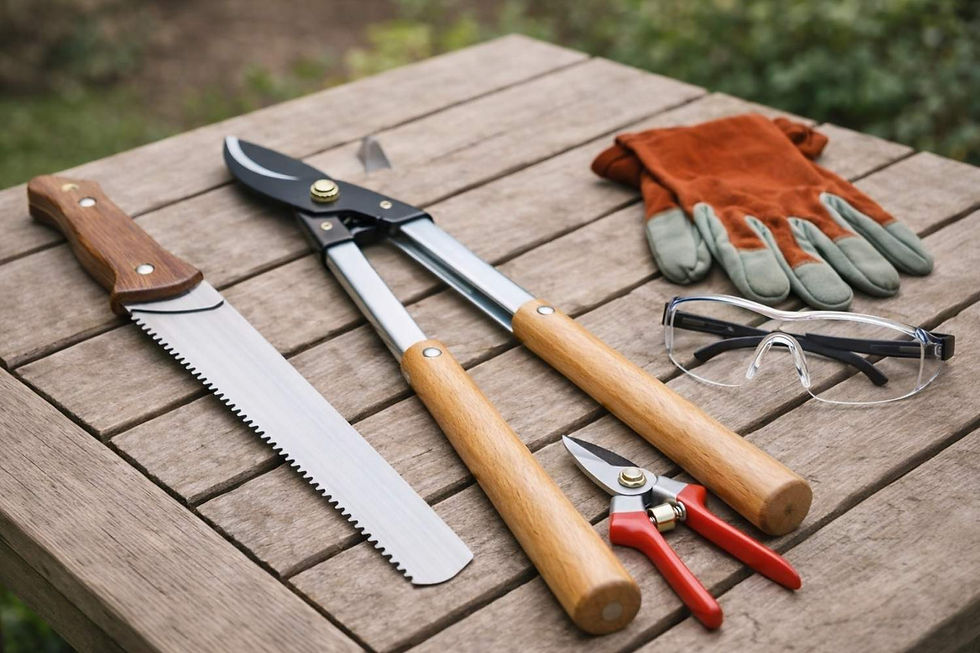
Using the right tools ensures neat cuts, faster healing, and reduced risk of disease. Amelanchier benefits from precise, light pruning rather than heavy cutting, so sharp tools are especially important.
Tool | Use |
Small shoots and light thinning | |
Loppers | Medium branches |
Pruning saw | Larger stems |
Disinfectant | Prevents disease spread |
Gloves and eye protection | Personal safety |
Top Tip: Always disinfect tools after removing dead or diseased wood.
How to Prune Amelanchier Safely
Pruning Amelanchier (Juneberry or Serviceberry) should be done carefully and with a light, selective approach. The goal is to preserve its natural, airy shape, encourage reliable flowering, and prevent congestion within the canopy.
Unlike some ornamental trees, Amelanchier does not respond well to heavy cutting. Gentle shaping and thinning are far more effective than dramatic pruning.
1. Inspect the Tree First
Before making any cuts, step back and assess the overall structure.
Look for:
Dead, damaged, or diseased branches
Broken or storm-damaged stems
Weak, spindly growth
Crossing or rubbing branches
Deadwood should always be removed first, as it offers no benefit to the tree and may increase the risk of infection.
Take note of the tree’s natural layered form. Amelanchier often has a graceful, multi-stem structure — this should be preserved rather than reshaped heavily.
2. Prune at the Correct Time
Timing is especially important for Amelanchier.
Prune immediately after flowering (late spring to early summer)
Avoid heavy winter pruning
Do not prune just before flowering
Amelanchier flowers on wood formed the previous year. Pruning too early in the season can remove developing flower buds and reduce blossom display.
Post-flowering pruning allows new growth to form in time for next year’s buds.
3. Make Correct Pruning Cuts
Clean technique supports faster healing and reduces the risk of decay.
Cut just outside the branch collar
Do not cut flush against the trunk
Avoid leaving long stubs
Make smooth, controlled cuts
The branch collar contains specialised tissue that helps seal pruning wounds naturally. Poor cuts can delay healing and increase vulnerability to disease.
4. Remove Crossing or Congested Growth
Amelanchier can become crowded over time, especially in multi-stem forms.
Prune out stems that:
Cross or rub against each other
Grow inward toward the centre
Create dense, shaded areas
Disrupt the natural outline
Improving airflow through the canopy helps reduce fungal risk and supports healthier foliage.
5. Control Suckers and Upright Shoots
Amelanchier may produce suckers from the base or upright shoots within the crown.
Remove unwanted basal suckers cleanly at ground level
Retain selected stems if maintaining a multi-stem shape
Remove overly vigorous upright shoots that spoil the outline
This keeps the structure balanced without over-thinning.
6. Keep Pruning Light and Balanced
Amelanchier responds best to gradual shaping rather than heavy restructuring.
Avoid removing more than 20% of the canopy in one season.
Over-pruning can:
Reduce flowering
Encourage excessive upright regrowth
Stress the tree
Disrupt its elegant natural habitat
A light annual tidy is far better than occasional severe cutting.
Key Safety Principles
Always:
Use sharp, disinfected tools
Prune on a dry day
Make clean, controlled cuts
Step back regularly to assess balance
Avoid working at height without proper equipment
For broader advice on pruning ornamental trees in the UK, the Royal Horticultural Society also provides a detailed tree pruning guide.
Quick Fact: Mature Amelanchier trees usually require only occasional maintenance pruning to remove deadwood, improve airflow, and preserve their graceful layered shape. Heavy pruning is rarely necessary.
What Should You Avoid When Pruning Amelanchier?
When pruning Amelanchier, you should avoid heavy winter pruning, excessive reshaping, and poor cutting technique, as these can reduce flowering and damage the tree’s natural structure.

Avoiding mistakes is just as important as using correct pruning methods. Amelanchier flowers on wood formed the previous year, and it responds best to light, selective pruning rather than dramatic intervention.
Never:
Prune heavily in winter
Remove large structural stems unnecessarily
Top the tree
Leave long stubs
Cut flush against the trunk
Over-thin the canopy
Avoid applying wound paint. Current arboricultural guidance advises against sealants, as they can trap moisture and increase decay risk.
Amelanchier is valued for its natural form — excessive reshaping spoils its character.
Amelanchier Pruning Checklist
A proper Amelanchier pruning checklist involves pruning immediately after flowering, removing dead or congested growth first, keeping cuts light and precise, and preserving the tree’s natural layered shape.
Use this step-by-step checklist to ensure your Amelanchier remains healthy, balanced, and full of spring blossom.
Before You Start
Prune immediately after flowering
Choose a dry day
Use clean, sharp tools
Assess natural shape
Remove First
Dead or damaged stems
Crossing or rubbing branches
Inward-facing growth
Unwanted suckers
During Pruning
Thin lightly
Preserve layered structure
Avoid removing flowering wood unnecessarily
Make cuts just outside the branch collar
Final Checks
Step back regularly
Avoid removing more than 20%
Clear debris
Allow natural healing
Regular light pruning is far better than occasional heavy cutting.
Popular Amelanchier Types and Pruning Needs
Several Amelanchier varieties are widely grown across the UK, both as ornamental feature trees and wildlife-friendly garden choices.
Amelanchier is valued for its early spring blossom, delicate branching structure, edible summer berries, and outstanding autumn colour, making it ideal for smaller gardens, mixed borders, and naturalistic planting schemes.
Popular Amelanchier types include:
Amelanchier lamarckii (Juneberry Tree)
Cultivars such as Amelanchier lamarckii are among the most widely planted forms in the UK, appreciated for their multi-stem habit and profuse white spring flowers. Prune lightly after flowering to maintain airflow and remove congested stems while preserving the tree’s natural layered structure.
According to the RHS plant page for Amelanchier lamarckii, it thrives in well-drained soil in full sun or partial shade and tolerates a range of garden conditions.
Amelanchier canadensis (Serviceberry Tree)
Cultivars such as Amelanchier canadensis are known for their upright growth and elegant form. These trees require minimal intervention, responding best to light thinning and occasional deadwood removal rather than heavy structural pruning.
Amelanchier ‘Ballerina’ (Juneberry Tree)
Cultivars such as Amelanchier ‘Ballerina’ offer a slightly more compact habit, making them well-suited to smaller gardens. Prune gently after flowering, focusing on maintaining shape and removing inward-growing stems without disrupting the canopy.
Amelanchier ‘Ballerina’ is valued for its compact habit and abundant spring flowers — see the RHS plant page for Amelanchier × grandiflora ‘Ballerina’ for more details on its characteristics and cultivation.
Amelanchier alnifolia (Saskatoon Berry)
Cultivars such as Amelanchier alnifolia are valued for their edible berries and shrub-like growth habit. Light pruning after fruiting helps maintain structure and encourages healthy new growth without reducing flowering potential.
All Amelanchier varieties share similar pruning requirements, with post-flowering pruning being the safest time for shaping work.
Young Amelanchier trees benefit from light formative pruning to establish a balanced framework, while mature trees usually require very little intervention beyond:
removing dead or damaged wood
thinning congested growth
maintaining an open canopy for airflow and light
controlling unwanted basal suckers
Amelanchier responds best to a gentle, selective approach rather than heavy reshaping, preserving its natural elegance and seasonal display.
How to Prune Amelanchier: At a Glance
Step | What to Do | Why It Matters |
1 | Prune after flowering | Protects next year’s buds |
2 | Inspect structure | Identifies problem stems |
3 | Remove dead wood | Improves health |
4 | Remove crossing branches | Prevents bark damage |
5 | Thin lightly | Encourages airflow |
6 | Remove suckers | Maintains form |
7 | Cut correctly | Supports healing |
8 | Use clean tools | Reduces infection risk |
9 | Step back often | Prevents over-pruning |
10 | Preserve natural shape | Maintains ornamental value |
Amelanchier responds best to gentle maintenance rather than heavy intervention.
Prune with Confidence
Learning how to prune Amelanchier correctly helps preserve its graceful structure, protect next year’s blossom, and maintain healthy growth year after year. By pruning immediately after flowering in late spring, using clean and sharp tools, and keeping cuts light and selective, you give your tree the best chance to thrive.
Amelanchier responds best to a gentle, balanced approach. Most established trees require only occasional thinning and deadwood removal rather than heavy structural pruning. Over-cutting can reduce flowering, disrupt its natural layered form, and encourage excessive upright regrowth, so restraint is just as important as technique.
At Bowhayes Trees, we have over 30 years’ experience growing and supplying ornamental trees across the UK. We consistently see the strongest results when Amelanchier is pruned at the correct time — after flowering — with careful shaping that respects its elegant, multi-stem character.
If you’re unsure about timing or variety-specific care, explore our Amelanchier tree range or contact our team for guidance tailored to your garden.


FAQs
When should I prune Amelanchier in the UK?
Amelanchier should be pruned immediately after flowering, typically in late spring to early summer (May to June). Pruning at this time protects next year’s flower buds, as Amelanchier blooms on wood formed the previous year. Winter pruning can remove developing buds and reduce blossom.
Can I prune Amelanchier in winter?
It’s best to avoid pruning Amelanchier in winter unless you are removing dead or damaged wood. Heavy winter pruning can remove flower buds and reduce the following spring’s display. Structural shaping is safest immediately after flowering.
How much can I cut back an Amelanchier tree?
You should avoid removing more than around 20% of the canopy in one season. Amelanchier responds best to light, selective thinning rather than heavy cutting. Over-pruning can reduce flowering and encourage excessive upright growth.
Does Amelanchier need pruning every year?
No, most established Amelanchier trees do not need annual pruning. They typically require only occasional maintenance to remove deadwood, thin congested growth, or control suckers. Light, regular checks are better than drastic reshaping.
Should I use wound paint after pruning Amelanchier?
No, wound paint is not recommended. Current UK arboricultural guidance advises against using sealants, as they can trap moisture and increase the risk of decay. Clean, well-placed cuts just outside the branch collar allow the tree to heal naturally.
To display the Widget on your site, open Blogs Products Upsell Settings Panel, then open the Dashboard & add Products to your Blog Posts. Within the Editor you will only see a preview of the Widget, the associated Products for this Post will display on your Live Site.
Start your 14 days Free Trial to activate products for more than one post.
icon above or open Settings panel.
Please click on the


Comments