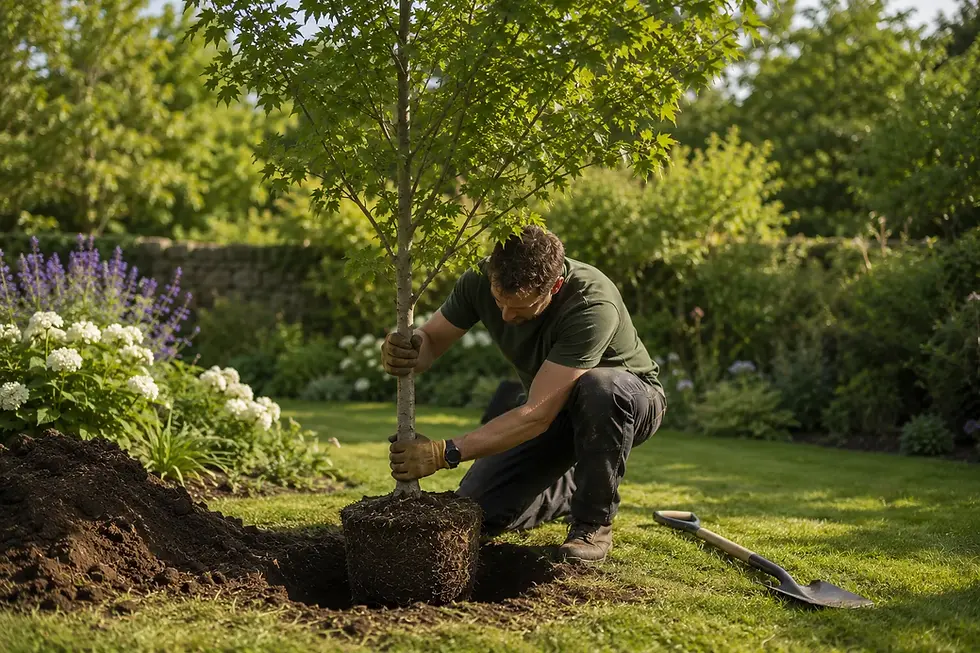
How to Plant a Redbud Tree in the UK


Redbud trees (Cercis species) can thrive in UK gardens when planted in the right conditions. For best results, plant them in autumn or early spring, in a sunny, sheltered position with well-drained soil.
Known for their vibrant spring blossom and elegant, heart-shaped leaves, redbuds bring colour and structure to gardens of all sizes.
At Bowhayes Trees, we supply redbud varieties suited to UK conditions, and we regularly see the difference that correct planting makes to long-term success.
This guide explains exactly how to plant a redbud tree step by step, helping you establish a healthy, well-formed ornamental tree.
IN THIS GUIDE
Redbud Tree Planting
Plant redbud trees in autumn or early spring in a sunny, sheltered spot with well-drained soil. Position the root collar level with the soil and water thoroughly after planting.
KEY FACTS AT A GLANCE
🌱 Best planting time Late autumn to early spring (bare root); year-round for potted
☀️ Best position Full sun or light partial shade, sheltered from strong winds
🌿 Soil type Moist but well-drained soil; improve heavy clay with organic matter
📏 Planting depth Root collar level with soil surface
🌳 Spacing
3–6 metres depending on variety
🪵 Staking
Only needed in exposed or windy locations
Best time to plant a redbud tree in the UK (seasonal guide)
The best time to plant a redbud tree in the UK is autumn or early spring, when soil conditions allow roots to establish before active growth begins.
Planting during these periods gives the tree time to settle and develop a strong root system before the demands of summer.
Recommended Planting Times
Tree Type | Best Planting Time |
Bare root redbud | November to March |
Potted redbud | Year-round (best spring or autumn) |
Bare root redbud trees should be planted during the dormant season, when they are not actively growing. This reduces stress and encourages early root establishment.
Potted redbud trees offer greater flexibility and can be planted throughout the year, provided the ground is not frozen or waterlogged.
According to the Royal Horticultural Society, planting trees during the dormant season gives them the best chance to establish before spring growth begins.
Early autumn planting encourages root development before winter, leading to stronger growth the following year.
Best place to plant a redbud tree in the UK (sun, soil & positioning)
Redbud trees grow best in sunny, sheltered positions with well-drained soil, particularly in warmer areas of the garden.
They perform particularly well in:
Full sun or light partial shade
Sheltered locations protected from strong winds
Moist but well-drained soil
Areas with enough space for the canopy to develop

Redbuds prefer slightly warmer planting positions than many native UK trees. A sheltered location helps protect early spring blossoms from cold winds and improves flowering reliability.
Spacing Guide for Redbud Trees
Planting Situation | Recommended Spacing |
4–6 metres from buildings | |
Multiple ornamental trees | 4–5 metres apart |
3–4 metres apart |
Correct spacing allows the tree’s crown to develop naturally while improving airflow through the canopy.
Compact ornamental varieties such as Cercis canadensis ‘Eternal Flame’® and Cercis canadensis ‘Hearts of Gold’ are well suited to smaller gardens due to their manageable size and colourful foliage.
Larger varieties such as Cercis siliquastrum ‘Bodnant’ or Cercis canadensis var. texensis ‘Oklahoma’ can create a striking focal point in larger spaces.
At Bowhayes Trees, we consistently see stronger flowering and healthier growth when redbuds are planted in warm, sunny positions with protection from strong winds.
Should you choose a bare root or potted redbud tree?
You should choose a bare root redbud tree for winter planting and better value, and a potted redbud tree if you need flexibility in planting time. Both types establish well when planted correctly.
Bare Root Redbud Trees
Best for planting during the dormant season
More cost-effective for larger planting projects
Only available at certain times of year
Quick to establish
Potted Redbud Trees
Suitable for planting throughout the year
Ideal for smaller gardens or individual feature trees
Easier for beginner gardeners
Require more careful watering after planting
Bare root trees are ideal for winter planting when the tree is dormant. Because they are supplied without soil, they are easier to handle and more economical for larger planting schemes.
Potted trees are better suited to smaller-scale planting where flexibility and convenience are more important.
How do you prepare the soil for a redbud tree?
To prepare soil for a redbud tree, create a loose, fertile, and well-drained planting area that allows roots to establish quickly.
Good soil preparation is essential for strong early growth and long-term success.
Soil Preparation Checklist
Remove grass and weeds within a 1 metre radius
Dig a hole twice the width of the roots or container
Keep planting depth consistent with root depth
Loosen soil at the base and sides of the hole
Mix in compost or organic matter
Redbuds prefer well-drained soil, so improving drainage is especially important when planting in heavier clay soils.
The Royal Horticultural Society provides detailed guidance on preparing soil structure and drainage before planting trees.
Incorrect planting depth is one of the most common causes of poor tree establishment.
How do you plant a bare root redbud tree?
To plant a bare root redbud tree, soak the roots, position the tree at the correct depth, and backfill carefully with soil.
Correct planting technique is essential to avoid poor establishment and long-term growth issues.
Step-by-Step Guide
Keep roots moist and protected before planting
Soak the roots in water for 30–60 minutes
Dig a hole twice the width of the root spread
Position the tree so the root collar sits level with the soil
Spread roots naturally
Backfill gradually using the excavated soil
Firm gently to remove air pockets
Water thoroughly to settle the soil
Planting at the correct depth is critical for successful establishment.
How do you plant a potted redbud tree?
To plant a potted redbud tree, dig a hole wider than the rootball, position the tree at the correct depth, and water thoroughly after planting.
Step-by-Step Guide
Water the pot thoroughly before planting
Dig a hole twice the width of the rootball
Remove the tree carefully from the container
Loosen any circling roots
Position the tree with the rootball level with the soil surface
Backfill carefully and firm gently
Water generously after planting
Avoid planting deeper than the original pot level, as this can restrict root development and affect long-term growth.
Do redbud trees need staking after planting?

Redbud trees may need staking after planting, particularly in exposed or windy locations.
Staking helps stabilise the tree while roots establish, but is not always necessary in sheltered gardens.
Staking is most useful for:
Newly planted trees over 1.5 metres tall
Windy or exposed planting positions
Areas with loose or sandy soil
If staking is required, use a single angled stake with a flexible tie positioned low on the trunk.
Remove the stake after the first growing season once the tree has established.
Why plant a redbud tree? Benefits and features
Redbud trees are valued for their early spring blossom, ornamental foliage, and compact growth, making them ideal for UK gardens.
Key benefits include:
Early spring flowers before most trees come into leaf
Heart-shaped foliage that creates a soft canopy
Compact ornamental form suitable for smaller spaces
Nectar-rich flowers that support pollinators
Some varieties are particularly valued for their foliage colour. For example, Cercis canadensis ‘Carolina Sweetheart®’ produces variegated pink, green, and cream leaves, while Cercis ‘Merlot’ combines deep burgundy foliage with improved heat tolerance.
Weeping forms such as Cercis canadensis ‘Ruby Falls’ and Cercis canadensis ‘Lavender Twist’ create distinctive architectural shapes that work well as focal trees.
Which redbud trees grow best in the UK?
Several redbud varieties perform reliably in UK conditions, offering a range of foliage colours, sizes, and growth habits.
Recommended Redbud Varieties
Redbud Variety | Best For | UK Suitability |
Purple foliage | Hardy in sheltered UK gardens | |
Golden-orange foliage | Hardy and ornamental | |
Compact growth and pink blossom | Suitable for smaller spaces | |
Weeping habit | Ideal for smaller gardens | |
Soft pink spring flowers | Reliable ornamental variety | |
White blossom Judas tree | Hardy and distinctive |
Choosing the right variety depends on available space, preferred foliage colour, and overall garden design.
How to plant a redbud tree successfully
Planting a redbud tree correctly ensures strong establishment, reliable flowering, and long-term garden impact.
By choosing the right location, preparing the soil properly, and planting at the correct depth, you give your tree the best chance to thrive.
At Bowhayes Trees, we supply a carefully selected range of ornamental trees suited to UK gardens. Following the planting principles in this guide will help your redbud tree establish successfully and perform well for years to come.


Redbud tree planting FAQs
How big do redbud trees grow in the UK?
Most redbud trees grow to around 5–8 metres tall and wide, depending on the variety. Compact varieties are available for smaller gardens, while larger types can be used as feature trees.
When is the best time to plant a redbud tree in the UK?
The best time to plant redbud trees is autumn or early spring, when the soil is workable and roots can establish before active growth begins.
Do redbud trees need full sun?
Redbud trees grow best in full sun or light partial shade. A sunny, sheltered position encourages stronger flowering and healthier growth.
Are redbud trees suitable for small gardens?
Yes, many redbud varieties are well suited to smaller gardens due to their compact growth habit and manageable canopy size.
How fast do redbud trees grow?
Redbud trees have a moderate growth rate, typically growing around 30–60 cm per year under good conditions.
Do redbud trees lose their leaves in winter?
Yes, redbud trees are deciduous, meaning they lose their leaves in autumn and regrow them in spring.
Do redbud trees need pruning?
Redbud trees require minimal pruning. Remove dead, damaged, or crossing branches in late winter while the tree is dormant.
Are redbud trees hardy in the UK?
Most redbud varieties are hardy in the UK, especially when planted in sheltered positions. Protection from strong winds improves flowering and overall performance.
Where should I buy a redbud tree in the UK?
The best place to buy a redbud tree in the UK is from a specialist nursery that offers varieties suited to British growing conditions.
Look for suppliers that provide healthy, well-established trees, clear planting guidance, and a range of sizes or forms to suit different garden types.
At Bowhayes Trees, we grow and supply carefully selected redbud varieties chosen for their reliability, ornamental value, and suitability for UK gardens. Each tree is supplied with guidance to help ensure successful planting and establishment.
Which redbud tree is best for small gardens in the UK?
The best redbud trees for small UK gardens are compact or slow-growing varieties that offer ornamental interest without becoming too large.
Good options include:
Cercis canadensis ‘Eternal Flame’® – compact size with vibrant multi-coloured foliage
Cercis canadensis ‘Hearts of Gold’ – bright golden leaves and manageable growth
Cercis chinensis ‘Avondale’ – naturally compact with reliable spring blossom
Cercis canadensis ‘Ruby Falls’ – a weeping form ideal for feature planting in smaller spaces
These varieties typically stay smaller than standard redbuds and are well suited to patios, borders, or feature planting.
When choosing a tree for a smaller garden, consider both height and spread, and allow enough space for the canopy to develop naturally.
To display the Widget on your site, open Blogs Products Upsell Settings Panel, then open the Dashboard & add Products to your Blog Posts. Within the Editor you will only see a preview of the Widget, the associated Products for this Post will display on your Live Site.
Start your 14 days Free Trial to activate products for more than one post.
icon above or open Settings panel.
Please click on the