Year-Round Beech Tree Care Guide

Table of Contents

Beech trees (Fagus sylvatica) are a familiar and much-loved feature of the UK landscape, valued for their smooth grey bark, dense canopy, and rich seasonal colour. From fresh green spring foliage to copper and golden tones in autumn, beech trees offer strong structure and long-term interest in gardens, estates, paddocks, and larger outdoor spaces.
Beech is also widely used as hedging across the UK, particularly for boundaries and screening. While beech trees and beech hedging share many care requirements, hedges often need closer attention due to their dense planting and shallow root systems.
This year-round beech tree care guide explains how to look after beech trees in the UK climate through every season. Covering watering, mulching, pruning, common pests and diseases, and long-term care, it provides practical guidance for caring for beech trees and beech hedging in British gardens and landscapes.
What Do Beech Trees Need to Grow Well in the UK?
Beech trees have specific requirements that differ slightly from species such as birch, and understanding these early makes long-term care far easier.
Beech trees grow best in moist, fertile, free-draining soil and perform best in sheltered UK locations where they are protected from strong or drying winds. While they tolerate full sun, young beech trees benefit from protection from strong or drying winds, particularly in exposed UK sites.
Beech trees have shallow, fibrous root systems, which makes them particularly sensitive to drought and soil compaction. This is especially important for beech hedging, where closely planted roots compete for moisture and nutrients.
Mulching and avoiding disturbance around the root zone are key to maintaining healthy growth and preventing stress.
Quick Fact: Beech trees and hedging are highly sensitive to drought and compacted soil, particularly during their early years.
For planting advice, see our guide on choosing ornamental trees for UK gardens.
How Do You Care for Beech Trees Throughout the Year?
Beech trees respond strongly to seasonal changes, and adjusting care throughout the year helps prevent stress and encourages steady, healthy growth.
Season | Key Care Tasks | What to Watch For |
Monitor soil moisture, top up mulch and check new growth | Aphids, early drought stress | |
Deep watering during dry spells, maintain mulch | Leaf scorch, wilting, and thinning hedges | |
Planting, light pruning after leaf fall, and clearing fallen leaves | Fungal issues, compacted soil | |
Dormant pruning, shelter young plants in exposed sites | Frost damage, wind exposure |
This table provides a quick overview of beech tree and hedging care throughout the year, with more detailed guidance outlined below.

Spring
Spring marks the start of active growth. Monitor soil moisture carefully, particularly for young or newly planted beech trees and hedging, as dry springs can quickly lead to stress.
Inspect new leaves for aphids and early signs of fungal disease during mild, damp weather. Top up mulch if it has broken down over winter to retain moisture and suppress competing weeds.
Beech trees should not be pruned in spring, as active growth during this period makes them more vulnerable to stress and damage.
Summer
Summer is the most demanding season for beech trees in the UK due to increased risk of drought stress and leaf scorch.
Water deeply during dry periods, focusing on slow, thorough watering rather than frequent light watering. Beech hedging is particularly vulnerable in summer due to dense planting and benefits greatly from consistent moisture.
Maintain a good mulch layer to keep soil cool and reduce water loss. Watch for browning leaf edges or wilting foliage, which are common signs of drought stress.
Autumn
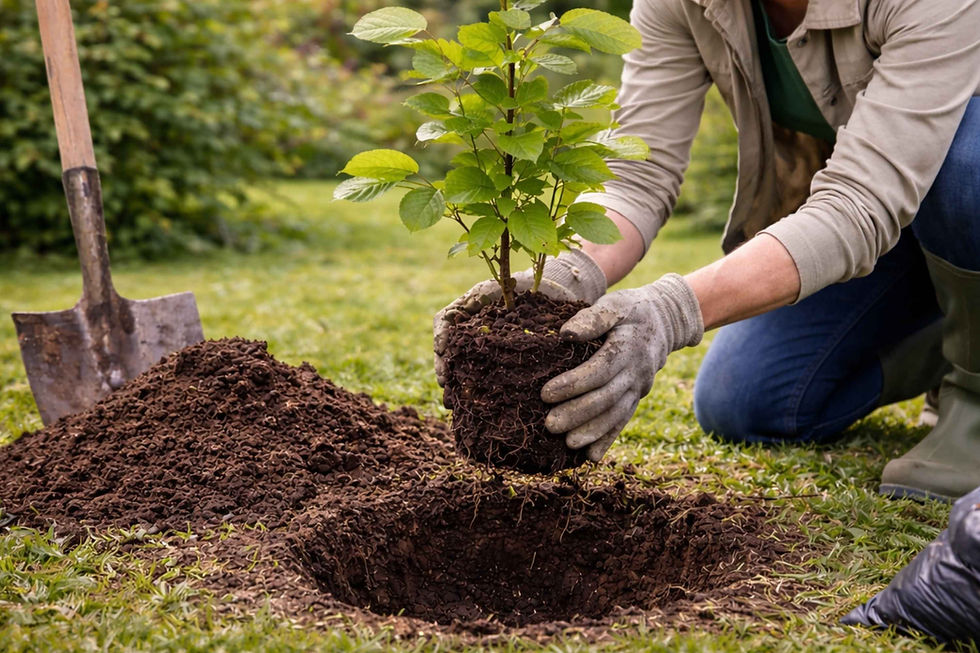
Autumn is an excellent time for planting new beech trees and hedging. Once leaves have fallen, light structural pruning can be carried out if required.
Clear fallen leaves if disease has been present during the growing season to reduce the risk of reinfection the following year. Apply a fresh mulch layer before winter to protect roots and improve soil conditions.
Young beech trees may retain copper-coloured leaves well into winter, adding seasonal interest.
Winter
Beech trees are hardy, but young trees and newly planted hedging benefit from shelter in exposed locations. Winter is the safest time for pruning, as trees are fully dormant.
Avoid pruning during periods of severe frost, and complete any pruning work before late winter growth begins.
Top Tip: Winter is the best time to prune both beech trees and hedging, provided conditions are mild and frost-free.
How Should Beech Trees Be Watered and Mulched?
Consistent watering is essential for healthy beech trees, particularly during establishment and dry weather.

Beech trees should be watered deeply rather than little and often, as deep watering helps moisture reach the shallow root system more effectively. A slow soak allows moisture to reach the shallow root system and encourages resilience during dry spells. Young trees and beech hedging may require more frequent watering in hot weather.
Mulching plays a vital role in conserving moisture, regulating soil temperature, and protecting roots. Organic mulches such as bark chips or leaf mould are ideal and should be applied in a wide ring around the base of the tree or hedge line. For practical guidance on mulch types and how to apply them effectively in UK gardens, see the Royal Horticultural Society’s mulch advice.
Expert Insight: Mulching is especially important for beech hedging, where closely spaced plants compete for water and nutrients.
When and How Should Beech Trees Be Pruned?
Beech trees require minimal pruning, but correct timing is essential to avoid stress and long-term damage.
The best time to prune beech trees in the UK is late autumn to winter, once the tree is fully dormant. Avoid pruning in spring or summer, as this can weaken the tree and encourage disease.
Pruning should be light and selective, focusing on removing dead, damaged, diseased, or crossing branches. Avoid heavy cutting, as beech trees respond poorly to severe pruning.
Beech hedging requires more regular trimming than specimen trees. Light trimming once or twice a year helps maintain density and shape, but hard cuts should be avoided. As with trees, hedges should only be pruned during dormancy.
The Royal Horticultural Society recommends pruning deciduous trees during dormancy to minimise stress and improve recovery.
Quick Fact: Beech bark is thin and easily damaged, so care should be taken to avoid wounding during pruning.
For more detailed guidance on techniques, timing, and how to avoid common mistakes, see our full guide on pruning beech trees.
What Pests and Diseases Affect Beech Trees in the UK?
Beech trees are generally robust but can develop problems if stressed by drought, compacted soil, or poor drainage.
Aphids are common during spring and summer and may cause sticky residue on leaves. Fungal leaf spot can occur during wet seasons, leading to spotting or early leaf drop, particularly where air circulation is poor.
Beech bark disease is rare in the UK but is more likely to affect weakened trees. Maintaining good overall health through watering and mulching is the best prevention.
Common Issues Overview
Issue | Symptoms | Management |
Aphids | Sticky leaves, distorted growth | Encourage natural predators |
Leaf spot | Dark leaf spots, early drop | Remove fallen leaves |
Drought stress | Scorching, leaf loss | Improve watering |
Root compaction | Poor growth, dieback | Reduce soil pressure |
For a broader look at tree pests and diseases affecting trees across the UK, see the Woodland Trust’s overview of tree pests and diseases.
Top Tip: Most beech tree and hedging issues are linked to dry or compacted soil rather than pests.
Year-Round Beech Tree Care Tips To Remember
Task | Best Time |
|---|---|
Water deeply | Spring–Summer |
Mulch roots | Spring & Autumn |
Inspect foliage | Spring–Summer |
Prune lightly (trees & hedges) | Late Autumn–Winter |
Clear fallen leaves | Autumn |
This checklist helps keep beech tree and hedging care manageable throughout the year.
Looking After Beech Trees Long Term
Beech trees are long-lived and rewarding when given the right year-round care, and good beech tree care in the UK relies on consistency rather than intensive intervention. Regular watering during dry periods, effective mulching, careful pruning, and seasonal monitoring are the foundations of successful long-term care.
Beech hedging care follows the same principles, with additional attention to watering and shaping to maintain dense, healthy growth along hedge lines.
With the right conditions and care, beech trees and hedges can thrive for generations, providing screening, structure, and seasonal interest across UK landscapes.
If you are planning to plant beech trees or hedging, explore our range of ornamental trees suitable for UK conditions.
FAQs
When is the best time to prune beech trees?
Beech trees should be pruned in late autumn to winter, once the tree is fully dormant.
How often should beech trees be watered?
Water deeply once a week during dry periods. Young trees and beech hedging may need more frequent watering in hot weather.
Does beech hedging need different care than beech trees?
Beech hedging has similar care requirements but needs closer attention to watering and pruning due to dense planting and shallow roots.
Why are my beech leaves turning brown at the edges?
This is commonly caused by drought stress or exposure to drying winds.
Are beech trees suitable for small gardens?
Yes, compact forms and trained beech hedging can work well in smaller spaces, provided mature size is considered.
To display the Widget on your site, open Blogs Products Upsell Settings Panel, then open the Dashboard & add Products to your Blog Posts. Within the Editor you will only see a preview of the Widget, the associated Products for this Post will display on your Live Site.
Start your 14 days Free Trial to activate products for more than one post.
icon above or open Settings panel.
Please click on the